FIND MINDFULNESS HARD? TRY THIS SIMPLE HACK
“Mindfulness is a way of befriending ourselves and our experience.” - John Kabat-Zinn
Practicing mindfulness can be easier said than done. According to a study by two Harvard psychologists, the average person spends around of 47% of the day on auto-pilot. If you think that’s rubbish, perhaps this sounds familiar: you get up, shower while you’re still half asleep, get dressed and quickly shove some breakfast in your mouth before rushing out the door. Then you get to work (without even realising how you got there) and go through your day before returning home (again, no idea!), eating whatever is in the fridge for dinner and passing out on the sofa after a three-hour Netflix binge. Rinse and repeat. That’s auto-pilot.
“We waste so much time looking for things that we think will make us happy that we forget to enjoy where we are right now”
Mindlessly scrolling social media or browsing Amazon for things you don’t really need is also a form of zoning out. We waste so much time looking for things that we think will make us happy that we forget to enjoy where we are right now. Practicing mindfulness for a few minutes every day can take you out of auto-pilot and in to the present moment, creating precious awareness. This awareness takes you out of ‘doing’ mode and into ‘being’ mode. We are, after all, human beings not human doings and mindfulness reminds us of this.
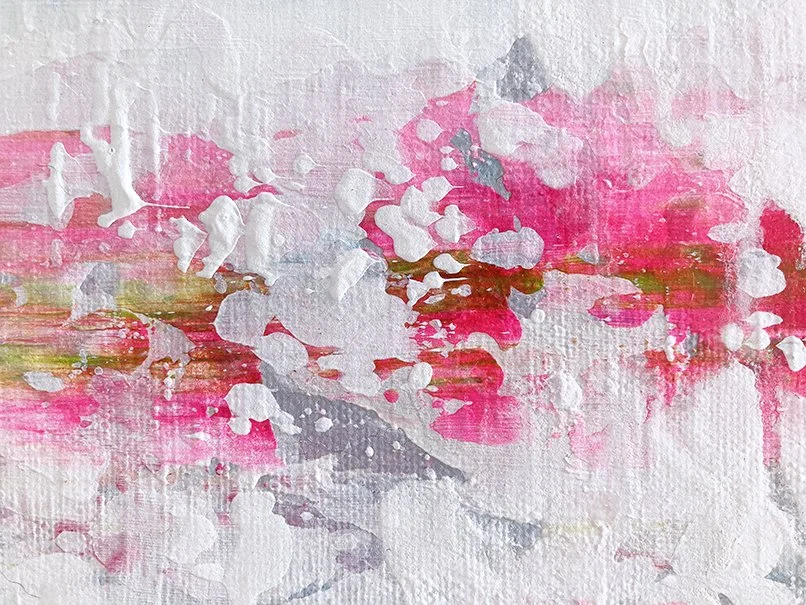
Detail from Colourful Silence III - 50x70cm, acrylic on canvas.
What if, instead of falling down an Instagram scroll-hole during your lunch break, you took some time to look at art? Research by the University of Westminster has shown that spending just 35 minutes in an art gallery can significantly lower your stress levels and some doctors are now prescribing visits over medication as a form of relief. If you can’t get to an art gallery I’m betting that you have some type of art in your home that you can study, perhaps while you’re waiting for the kettle to boil or even during those precious moments of solitude on the loo!
Whether it’s a print from Ikea (no judgement here!) or an original piece by a beloved painter, mindfully contemplating art (a practice known as slow-looking) can amplify your emotions and the presence of mind it cultivates enables you to really notice how you are feeling and from here you can work through any blocks you may be experiencing.
Take the image above, for example. I invite you to spend a few minutes really looking at it. Take in all the colours and how they have blended with each other. Notice the different layers — which are on top and which are deeper? What shapes stand out? Is your brain trying to turn them in to something familiar? While you’re doing this try box-breathing. This is a technique used to calm yourself if you’re feeling stressed or anxious. While going from corner to corner, inhale for a count of four. Hold for two before exhaling for another count of four. After a few minutes of this check in with yourself and see how you’re feeling. Are you calmer? Is your mood lifted? What emotions , if any, have come up?
While it may not replace medication altogether as a treatment for serious conditions, slow-looking can be a great option for mild symptoms of stress. Whether you create your own or simply enjoy the work of others, learning to use art as a tool for directed mindfulness can be a valuable asset to your self-care toolkit.
Kx