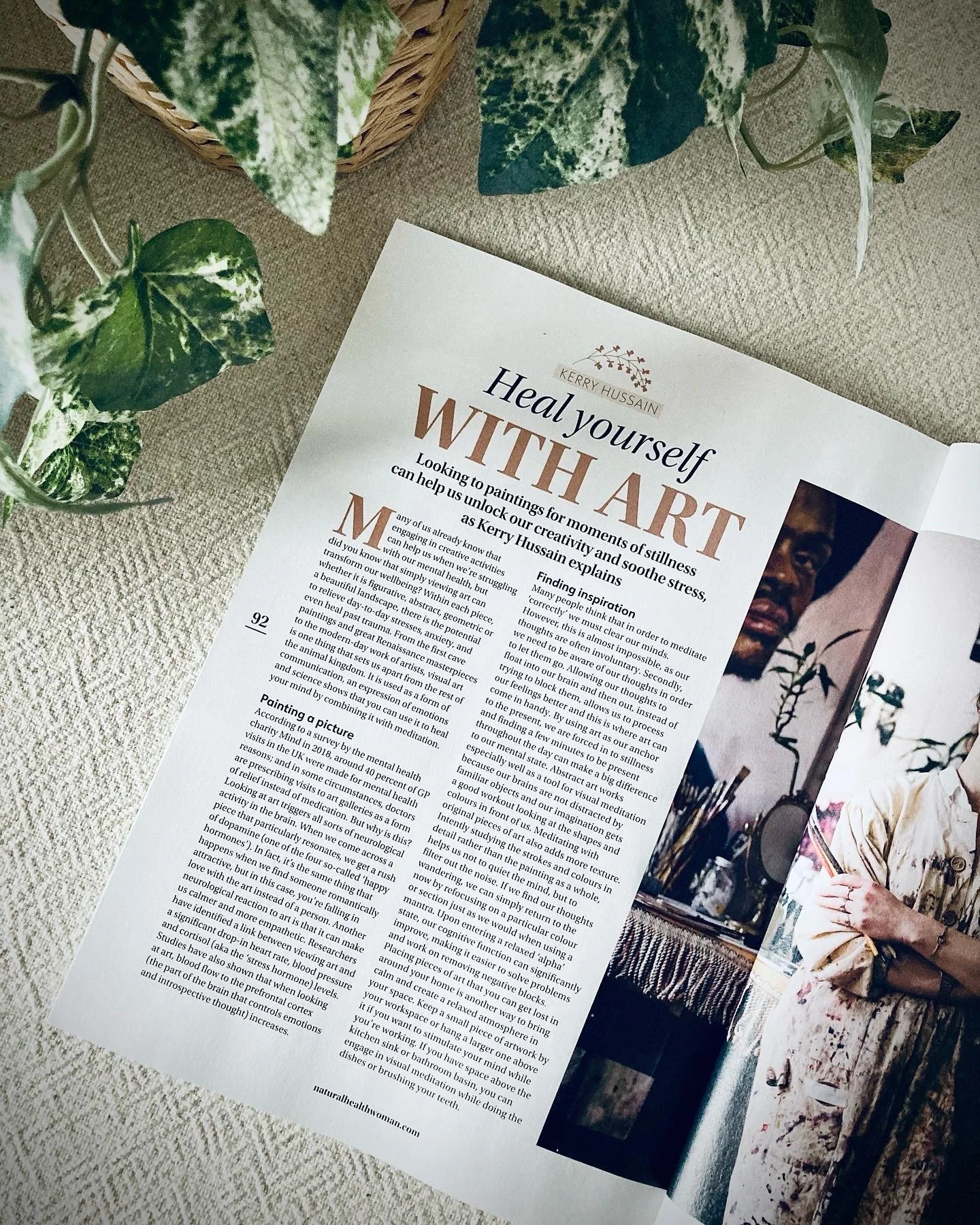
THE HEALING POWER OF ART
“Art is unquestionably one of the purest and highest elements in human happiness. It trains the mind through the eye, and the eye through the mind.”
It is widely accepted that engaging in creative activities can help to overcome mental health issues but simply viewing art can significantly improve our wellbeing. Many of us buy art to simply adorn our walls but, while this does positively enhance our living environment, using it solely for aesthetic purposes undermines the power it holds. Within each piece, whether it is figurative, abstract, geometric or a beautiful landscape, there is the potential to relieve day to day stresses and anxiety and even heal past trauma.
From the first cave paintings and great Renaissance masterpieces to the modern day work of artists such as Grayson Perry and Damien Hirst, visual art is one thing that sets us apart from the rest of the animal kingdom. It is used as a form of communication, an expression of emotions and now increasing amounts of scientific research has demonstrated that viewing art actually changes the neural pathways in our brains which can have a significant effect on our health both physically and mentally.
Looking at art triggers all sorts of neurological activity in the brain and upon coming across a piece that particularly resonates something rather wonderful happens. When we find something aesthetically pleasing we get a rush of dopamine (one of the four so-called ‘happy hormones’) which manifests itself as that special feeling that we all know but can’t quite describe. If it seems familiar it’s because the same thing happens when we find someone romantically attractive but in this case you’re falling in love with art instead of a person.
“Art has the power to stimulate our emotions in a big way. Combining it with with breath work can help to alleviate day to day stress and anxiety. With regular practice, it can be used as a form of therapy to help release trauma from our past.”
Another remarkable neurological reaction to visually pleasurable art is that it can make us calmer and more empathetic. Researchers have identified a link between viewing art and a significant drop in heart rate, blood pressure and cortisol (aka the ‘stress hormone’) levels. Studies have also shown that when looking at art, blood flow to the prefrontal cortex (the part of the brain that controls emotions and introspective thought) increases.
According to a Mind survey in 2018 around 40% of GP visits in the UK were made for mental health reasons and in 2019 over 8.6 million appointments were made due to stress-related illnesses (statista.com). It is now becoming increasingly common for doctors to prescribe visits to art galleries as a form of relief instead of medication.
Art has the power to stimulate our emotions in a big way. Combining it with with breath work can help to alleviate day to day stress and anxiety. With regular practice, it can be used as a form of therapy to help release trauma from our past.

Latitude V - 50x70cm, mixed media on canvas
There is a common misconception that in order to meditate ‘correctly’ we must clear our minds. Firstly, this is impossible because thoughts are involuntary. Secondly, we need to be aware of our thoughts in order to let them go. Letting our thoughts flow instead of trying to block them allows us to process our feelings. By using art as our anchor to the present we are forced in to stillness and it is only when we are still that we can find clarity.
Abstract art works especially well as a tool for visual meditation because our brains are not distracted by familiar objects and our imagination gets a good workout. To go one better use original pieces of art - the texture adds another element to focus on. Intently studying the strokes and colours in detail rather than the painting as a whole helps us not to quiet the mind but rather to filter out the noise. If we find our thoughts wandering we can simply return to the now by refocussing on a particular colour or section just as we would when using a mantra.
Upon entering a relaxed ‘alpha’ state our cognitive function can significantly improve, making it easier to solve problems and work on removing any negative blocks we may be experiencing. Placing pieces of art that you can get lost in around your home can also help to bring calm and create a relaxed atmosphere. Keep a small artwork by your workspace or hang a larger one above it. If you have space above the kitchen sink, or bathroom basin you can engage in visual meditation while doing the dishes or brushing your teeth. Finding a few minutes to be present throughout the day can make a big difference to our mental state.
Using art as a tool for mindful meditation as well as making our walls look nice makes it a valuable investment for our homes and our hearts.
Kx
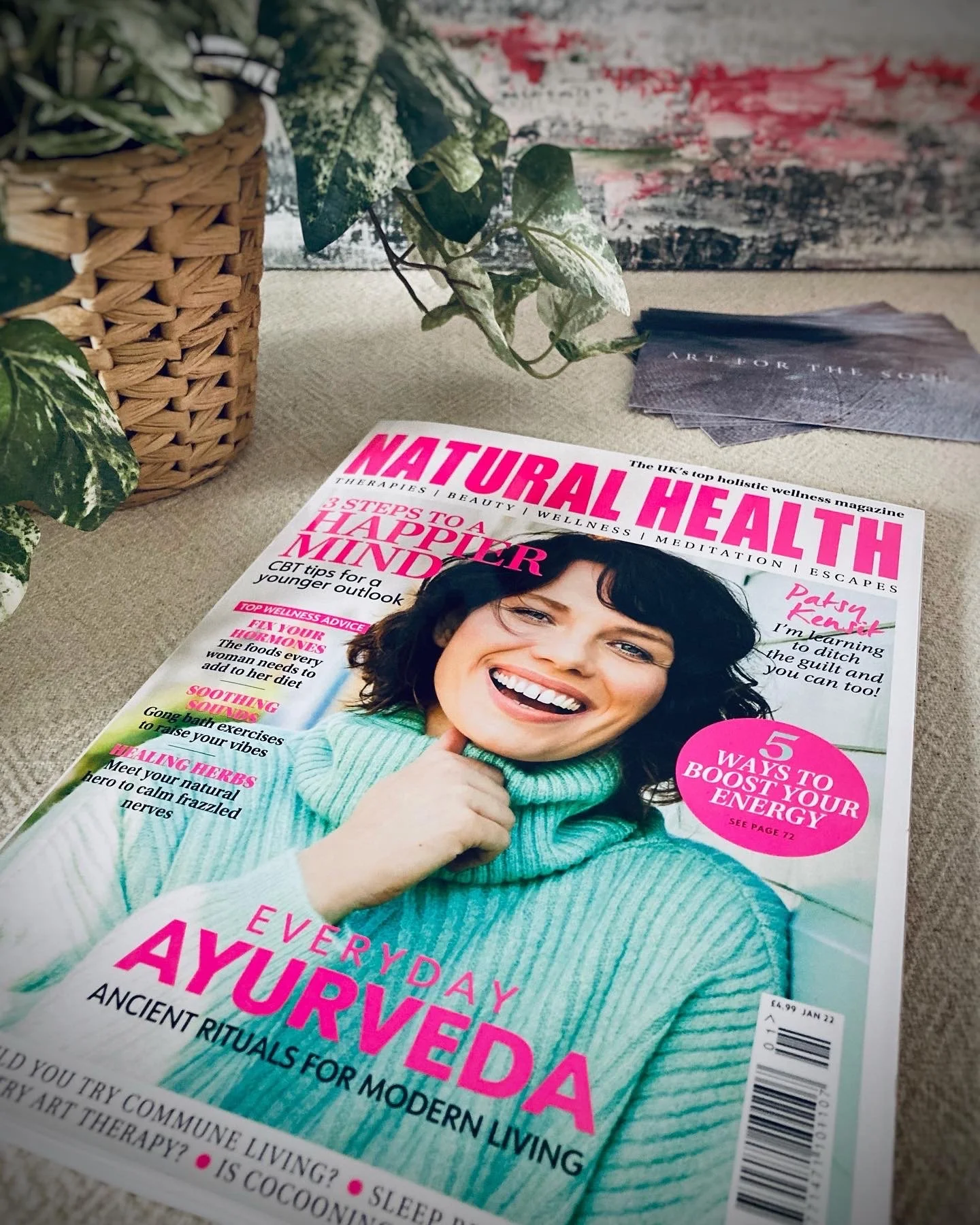
(NOTE: A version of this article appears in the January 2022 issue of Natural Health magazine)